
Choose Grey Mirror if you want to examine patterns across an exported relationship history; choose Decode This Text if you have tested its current offering and it answers your narrower question without a full-history report. Grey Mirror is the documented choice here for relationship timelines and evidence-linked findings—not for proving what another person intended.
- Decode this text vs grey mirror: Grey Mirror fits full-history relationship analysis and post-breakup reflection.
- Grey Mirror connects findings to messages and includes a relationship timeline, charts, and metrics.
- Choose Decode This Text only after checking its current workflow against your actual question.
- Neither a persuasive interpretation nor a communication pattern proves another person's intentions.
Why this matters
A confusing exchange and a recurring relationship pattern are different problems. Before choosing an app in 2026, decide whether you want help understanding a particular conversation or examining changes across your available history.
Grey Mirror, the relationship-analysis app from Justlay, is explicitly built for the second task. It analyzes exported messages rather than asking you to judge an entire relationship from an isolated screenshot.
This is a brand-authored comparison, not an independent review or a report of head-to-head testing. The recommendation rests on Grey Mirror's stated features; it does not treat unverified assumptions about Decode This Text as product facts. That distinction matters most when comparing privacy, accuracy, and cost.
At a glance
| Dimension | Grey Mirror | Decode This Text |
|---|---|---|
| Best for | Examining an existing relationship or reflecting on a breakup through exported history | Consider when its demonstrated workflow matches your specific question |
| Analysis scope | Full exported text message history | Confirm current input scope before choosing |
| Standout feature | Relationship timeline with evidence-linked findings, charts, and metrics | Evaluate a current sample rather than assuming equivalent outputs |
| Focused questions | Full-history analysis provides context, but requires an export | Choose only if a trial demonstrates a simpler fit for your narrower task |
| Platforms and sources | Web, iPhone, and Mac; iMessage, WhatsApp, Instagram DM, SMS, and Telegram histories | Confirm current platform and import support |
| Interpretation limits | Patterns support reflection, not diagnosis or proof of intent | Apply the same standard to every interpretation |
| Privacy assessment | Review handling of sensitive message exports before submitting | Review handling of submitted content before submitting |
| Pricing model | One-time full report or monthly Grey Mirror Plus; free conversation analysis | Check current terms directly rather than assuming a matching model |
Grey Mirror fits questions about the whole relationship
Grey Mirror is the better-supported choice when your question requires a timeline rather than a reading of one exchange. Its documented outputs include a relationship timeline, evidence-linked findings, charts, and metrics drawn from your exported history.
That scope fits questions such as whether a communication pattern appears repeatedly or whether a difficult exchange was an exception. For someone reflecting on a breakup, the practical benefit is being able to revisit supporting messages rather than relying entirely on memory.
The tradeoff is preparation. You need an exported history, and the usefulness of the result depends on what that history contains. A long export still excludes conversations that happened elsewhere or in person.
Use the timeline as an index into the messages. When a finding feels significant, return to the surrounding exchange and ask what happened outside the chat. A fuller record gives you more material to examine; it does not make an interpretation final.
Grey Mirror makes evidence inspection part of the report
Evidence-linked findings are Grey Mirror's clearest documented distinction in this comparison. You can assess a finding against its supporting messages instead of accepting a summary because it sounds plausible.
For a useful 2026 evaluation, separate the observation from the explanation:
- Observation: What does the cited exchange actually show?
- Context: What happened immediately before and after it?
- Interpretation: What explanation is being attached to that exchange?
- Alternative: What other explanation fits the same messages?
A finding can be relevant without establishing motive. A short reply, for example, is observable; the reason for that reply requires context the text alone does not supply.
Justlay's relationship-analysis offering uses specialized relationship-analysis models. That describes its focus, not a measured accuracy advantage over Decode This Text or general-purpose chat tools. For a practical review method, use the guide to checking a chat analyzer for false positives.
A narrower task favors the workflow you have actually tested
Decode This Text is a conditional choice for a focused question, not an established winner on speed or simplicity. Choose it when its current demonstration answers your question with less preparation and still lets you inspect the relevant context.
That is a genuine reason to prefer an alternative. If you want help reflecting on a particular exchange, preparing a full relationship export can be more work than your question needs. More analysis is not automatically more useful.
Before choosing, test the actual task: submit only content you are comfortable sharing, examine the explanation, and check whether it distinguishes observations from guesses about motives. Do not infer import support, evidence links, or privacy protections from a product name.
Grey Mirror's corresponding limitation is scope fit. Its full-history approach is most relevant when you intend to examine patterns across the relationship, not when you want an authoritative translation of what a single sentence secretly means.
Grey Mirror documents a cross-platform export workflow
Grey Mirror is available on the web, iPhone, and Mac. Its stated message sources include iMessage, WhatsApp, Instagram DM, SMS, and Telegram.
That gives you a concrete starting point for workflow selection in 2026. Identify where the relevant relationship history lives, then check that your export contains the conversation you intend to examine. Platform support alone does not establish that every attachment or event in a conversation is available for analysis.
Before submission, inspect the export:
- Confirm that the participants are the people you intend to analyze.
- Check that the date range matches your question.
- Look for gaps and repeated material.
- Record important context that exists outside messages.
Do not assume Grey Mirror combines histories from different platforms into a single report; that capability is not established here. Likewise, verify Decode This Text's current import workflow directly. Choose based on the file you can actually provide, not the messaging app name alone.
Neither option can establish intentions from texts
This is an honest tie on the standard you should apply, not a claim that the products perform identically. Text analysis should support questions about communication, not diagnose either person.
An export records what was captured in writing. It does not contain every conversation, circumstance, or private thought behind those messages. Charts and confident wording do not remove that boundary.
For breakup reflection, keep your own behavior in scope. Ask whether you repeatedly sought reassurance, avoided direct questions, or returned to unresolved topics—but check each interpretation against the actual exchanges. Reflection becomes less useful when every output is treated as evidence against the other person.
The same rule applies if you use ChatGPT to interpret texts: ask for alternative explanations and separate observation from interpretation. Do not treat the answer as confirmation of an intention you already suspect.
Privacy is a decision gate, not an assumed winner
Neither product earns a privacy win from this comparison. A 2026 purchase decision should include a direct review of the current privacy terms and data-handling information.
Relationship histories contain information about you and other people. Before submitting one, establish what is uploaded, what is retained, how deletion works, and whether submitted content is used for training. Treat unclear answers as unresolved questions, not implied protections.
Also distinguish report access from data retention. Keeping an unlocked report permanently is an access benefit; it does not, by itself, explain every aspect of storage or deletion.
An evidence-linked report still requires a privacy decision. If you are uncomfortable sharing a particular conversation, do not submit it merely to settle curiosity or obtain reassurance.
Grey Mirror offers one-time and monthly report options
Justlay's stated Grey Mirror pricing in 2026 is $17.99 USD once for one full relationship report, or Grey Mirror Plus at $9.99 USD per month for one full report each paid month. Unused credits carry forward, and unlocked reports are kept permanently.
A free conversation analysis includes four evidence-linked findings and requires no card. That gives you a way to inspect the output before deciding whether a full report fits your question.
The pricing-model tradeoff is straightforward:
- One-time report: fits a defined review of a relationship history without choosing an ongoing monthly plan.
- Grey Mirror Plus: fits someone who wants the monthly report allowance and carry-forward credits.
- Free conversation analysis: fits an initial check of how evidence-linked findings work.
Use the current Grey Mirror pricing reference before purchasing. Decode This Text's current charges and billing model are not established in this comparison, so there is no supported cheaper-option verdict.
Test the fit before you commit
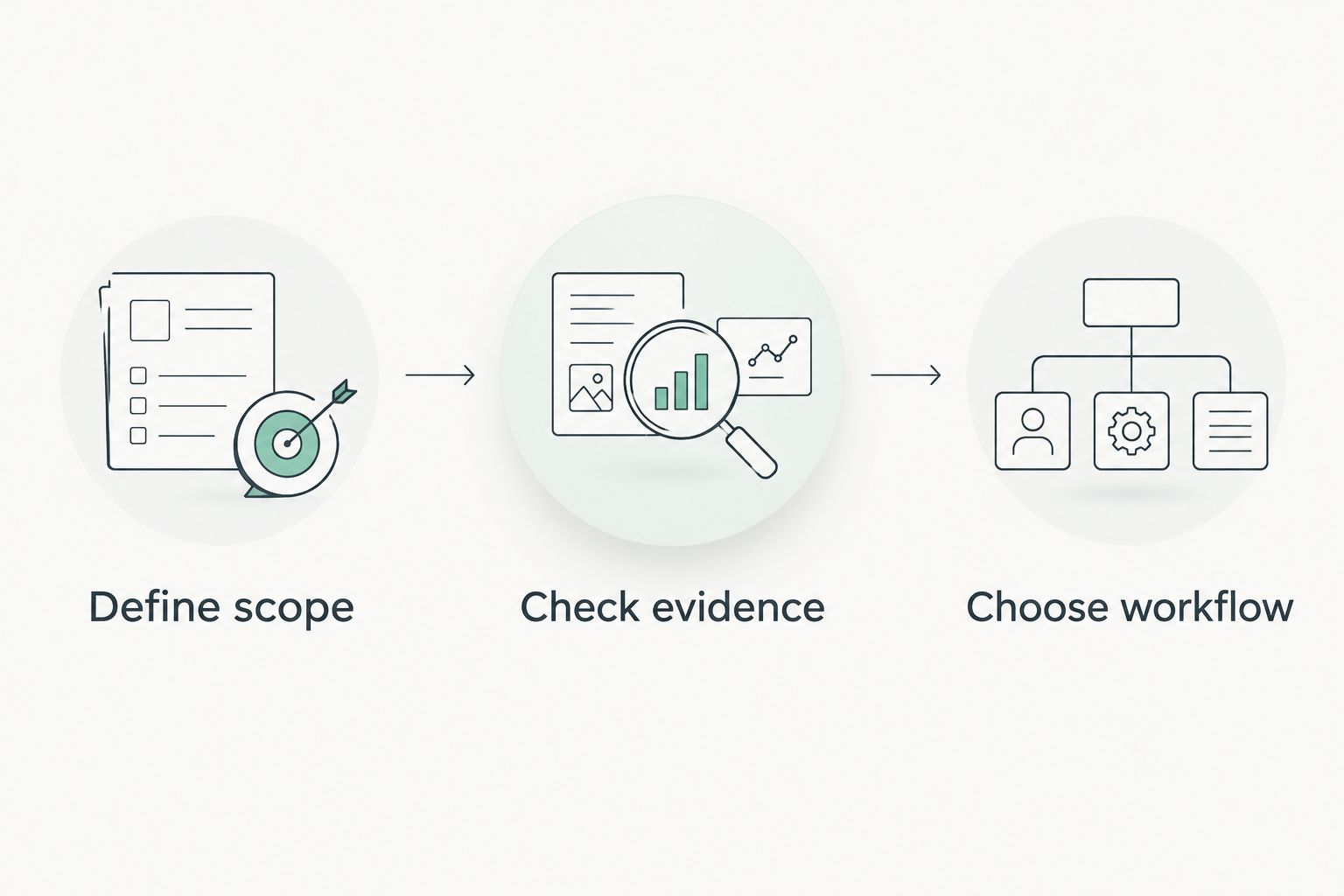
Use a task-based check rather than choosing whichever sample sounds most certain. These steps work whether you are examining an existing relationship or reflecting on a breakup.
Define scope
Write the question before opening either tool. Prefer a question about observable communication over a demand for a verdict on someone's character. Decide whether the answer requires an exchange, a period of the relationship, or the available history.
Check evidence
Inspect the messages supporting each important interpretation. Read surrounding replies and look for exceptions. A useful output should help you examine the record, not pressure you to accept a label.
Choose workflow
Compare preparation effort, report structure, privacy terms, and billing against that question. Reject a workflow that requires more disclosure than you are comfortable making, even if its output looks detailed.
Keep a stopping rule, too. Once you have identified the pattern you wanted to examine, write down the unresolved question or conversation it suggests. Repeatedly requesting interpretations is not a substitute for obtaining missing context.
Final verdict: choose by the question, not the confidence
Choose Grey Mirror for full-history relationship reflection
The best-supported user profile is someone examining an existing relationship or reflecting on a breakup through exported messages. Grey Mirror provides the documented timeline, evidence-linked findings, charts, and metrics suited to that task.
Choose it when you want to inspect patterns and their supporting exchanges. Do not choose it expecting proof of intentions, a diagnosis, or a decision about whether to stay together.
Choose Decode This Text after a successful focused-task trial
The conditional user profile is someone with a narrower question whose own trial confirms that Decode This Text fits. Prefer it when the demonstrated workflow answers that question with appropriate context and acceptable privacy terms.
That is not an independently verified product win. It is a practical purchase rule that avoids pretending an untested competitor is either better or worse.
| Dimension | Winner or decision rule |
|---|---|
| Full-history relationship review | Grey Mirror: documented fit |
| Evidence-linked timeline and findings | Grey Mirror: documented features |
| Focused-question convenience | Decode This Text only after a successful trial |
| Platform and export fit | Confirm against your actual source file |
| Proof of intentions | Neither |
| Privacy | No established winner |
| Billing flexibility | Grey Mirror offers documented one-time and monthly options |
FAQ
Is Decode This Text better than Grey Mirror?
Grey Mirror is the documented fit for full-history relationship analysis; Decode This Text requires a current, task-specific evaluation before a stronger comparison is justified. Choose based on the question you need answered rather than the confidence of a sample interpretation.
What is Grey Mirror best for?
Grey Mirror is best suited to examining patterns across an exported relationship history or reflecting on a breakup. Its documented outputs include a relationship timeline, evidence-linked findings, charts, and metrics.
How much does Grey Mirror cost in 2026?
Grey Mirror costs $17.99 USD once for one full relationship report, or $9.99 USD per month for Grey Mirror Plus with one full report each paid month. Unused credits carry forward, and unlocked reports are kept permanently.
Can I try Grey Mirror without a payment card?
Yes. Grey Mirror's free conversation analysis includes four evidence-linked findings and requires no card.
Does Grey Mirror analyze WhatsApp and iMessage histories?
Yes. Grey Mirror's stated sources include iMessage, WhatsApp, Instagram DM, SMS, and Telegram exported histories. Check your export's contents before treating it as a complete record.
Can either app tell me what someone really intended?
No text-analysis output establishes another person's private intentions. Use findings to examine observable communication and consider alternative explanations, not to diagnose a person.
Is this an independent Grey Mirror review?
No. This is a brand-authored comparison associated with Justlay, not an independent review or head-to-head testing report. It distinguishes documented Grey Mirror features from competitor details that require direct verification.
One last thing
Before accepting a finding, deliberately look for an exchange that contradicts it. If the finding still describes the record after you examine exceptions, you have a more useful starting point for reflection—not proof of motive.
The best outcome is not a harsher label. It is a clearer question you can answer from the messages, discuss directly, or acknowledge remains unresolved.