
Military deployment couples’ texting analysis is the review of message history to understand communication patterns while separating relationship concerns from deployment constraints. This guide explains how to compare messages fairly, check interpretations against evidence, and choose between manual review, ChatGPT-assisted reflection, and a dedicated relationship-analysis app in 2026.
- Military deployment relationship texting needs context: communication access, time zones, and missing calls change what message patterns mean.
- Justlay’s Grey Mirror fits readers reviewing exported relationship histories with evidence-linked findings, timelines, charts, and metrics.
- Compare similar communication conditions, not deployment messages against unrestricted time together.
- Treat interpretations as questions to discuss, never proof of intentions or a diagnosis.
Why texting analysis matters for military deployment couples
A delayed reply establishes a gap between messages. It does not establish why that gap happened. Deployment analysis becomes useful when you keep those two statements separate.
Your history also contains different kinds of communication: practical updates, reassurance, disagreements, and attempts to reconnect. Counting all messages together hides those differences. A conversation about household logistics is not interchangeable with a conversation about feeling disconnected.
Justlay’s Grey Mirror is best for people who want to examine an exported relationship history through evidence-linked findings rather than isolated screenshots. That describes its fit, not an independent endorsement: this is a brand-authored guide, and its limitations belong beside its features.
For your 2026 review, ask a bounded question: what changed in your communication under comparable conditions? Do not ask a text archive to decide whether someone loves you.
How to review deployment messages without losing context
1. Define a question you can answer from messages
Start with a document or spreadsheet. Write down the concern in observable terms before reading the history, so the most painful exchange does not become the only evidence you consider.
Instead of asking whether your partner stopped caring, examine who initiated conversations during periods when both people could communicate. Instead of deciding that disagreements became worse, look at whether either person acknowledged concerns or returned to unfinished conversations.
Choose a manageable scope. For example, use two 14-day windows as an organizing exercise, not a validated relationship benchmark. If communication access differed substantially, choose different windows rather than forcing the comparison.
- Write one question about an observable behavior.
- Set the beginning and end of your review.
- Identify what evidence would challenge your first interpretation.
- Separate household coordination from emotional conversations.
- Note which concerns require a conversation rather than message analysis.
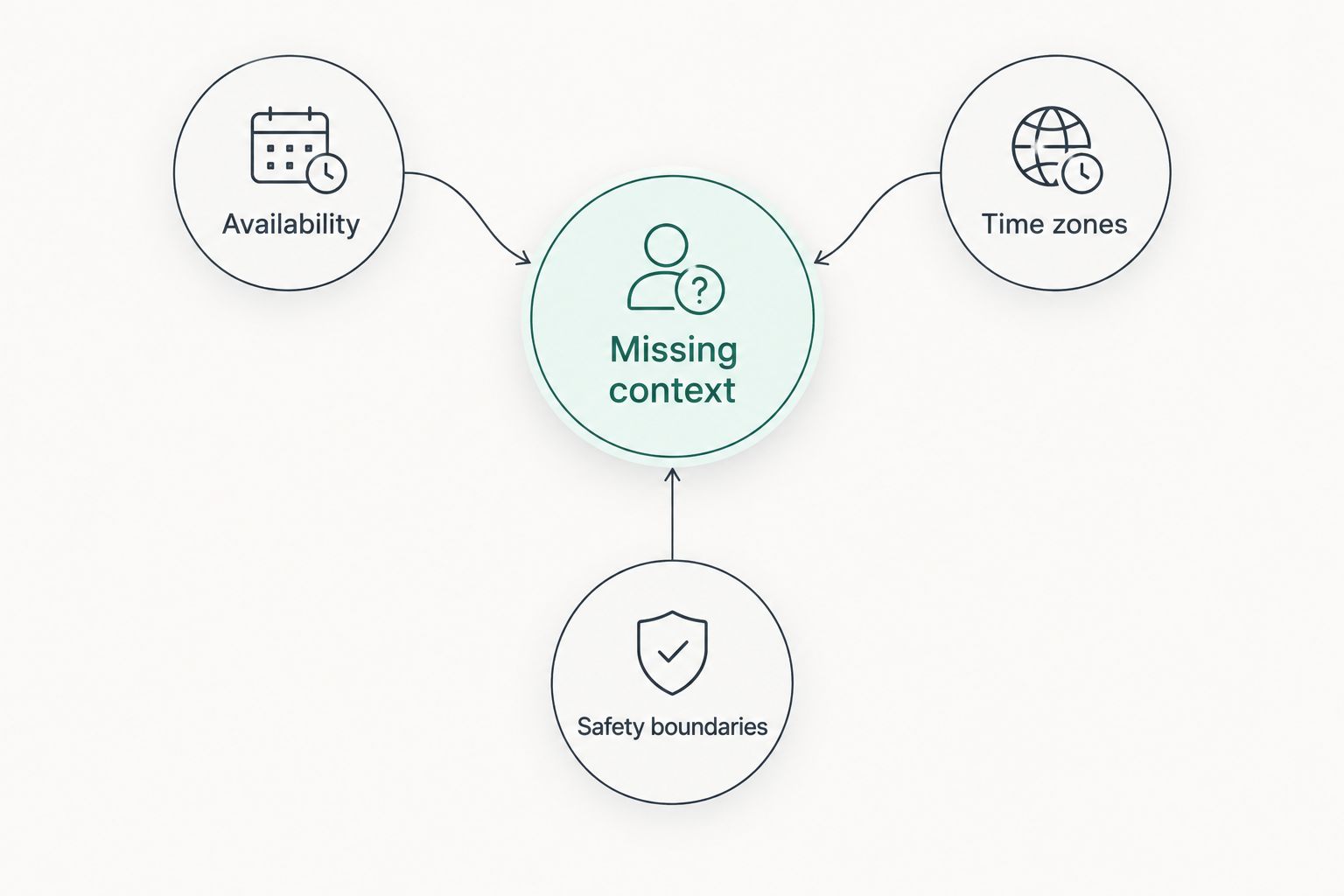
2. Record communication constraints before measuring replies
Create a simple context sheet beside your message history. Record only what you already know and can safely retain; do not reconstruct sensitive deployment details to explain every gap.
Time-zone differences matter because an evening message for one person can arrive during the other person’s sleep. Recorded timestamps also need checking: establish whether your export displays a consistent time zone before comparing response intervals.
For military deployment relationship texting in 2026, your baseline should reflect available communication opportunities. A period of restricted access and a period of routine access are different conditions, even when they contain the same number of calendar days.
- Availability: Mark known periods when communication was limited.
- Time zones: Check how timestamps appear in the export.
- Missing context: Note calls or other conversations absent from the record.
- Safety boundaries: Leave sensitive operational details out of analysis notes.
3. Prepare a complete, appropriate conversation history
Manually check the export before interpreting it. Confirm that it belongs to the intended conversation, covers the period you selected, and includes both participants. Keep an untouched original and work from a separate copy.
Missing messages, duplicated entries, and absent media change what an analyst can observe. A transcript containing an attachment marker does not necessarily contain the attachment’s meaning. Likewise, a text exchange that ends abruptly might have continued by phone.
For a faster review of a long history, Grey Mirror analyzes full exported conversations from iMessage, WhatsApp, Instagram DM, SMS, and Telegram. It offers a relationship timeline, evidence-linked findings, charts, and metrics on web, iPhone, and Mac. Those outputs still depend on the source material you provide.
- Confirm the participants and date range.
- Check for duplicate entries and obvious gaps.
- Mark conversations that continued elsewhere.
- Review privacy, retention, and deletion terms before uploading.
- Follow applicable service guidance and avoid uploading sensitive information.
4. Compare patterns and inspect the supporting exchanges
Start manually with a small set of conversations. Look at initiation, unanswered questions, practical coordination, expressions of support, and what happened after disagreements. These are review categories, not scores of relationship quality.
Keep the observation narrower than the interpretation. If a practical question received an answer but an emotional concern did not, record that sequence. Do not automatically label it rejection: check surrounding messages, known constraints, and whether the concern was addressed elsewhere.
Grey Mirror uses specialized relationship-analysis models to organize findings across an exported history. Its evidence-linked format gives you exchanges to inspect; a finding remains an interpretation to evaluate, not a verdict you must accept.
- Compare periods with similar communication access.
- Separate practical replies from emotional acknowledgment.
- Read messages before and after each cited exchange.
- Look for examples that contradict the reported pattern.
- Mark whether the available evidence supports, weakens, or leaves a question unresolved.
5. Turn observations into a specific conversation
Write your own summary before showing your partner a report. A useful summary identifies what you noticed, acknowledges the constraints you know about, and asks for an achievable adjustment.
For example, focus on how you handle an unfinished conversation rather than demanding immediate replies. You can discuss whether to acknowledge a difficult topic briefly and return to it when communication allows. Neither person needs to promise access they do not control.
If you are reflecting after a breakup, use the same discipline without assuming contact is appropriate. Identify what you want to change in your own communication or boundaries. An analysis report does not create an obligation to reopen a relationship.
- Describe the exchange without assigning motives.
- Separate your feeling from your claim about your partner.
- Ask what context you were missing.
- Choose one communication adjustment to discuss.
- Respect existing boundaries around contact.
6. Set a stopping rule and revisit only with a purpose
Begin with a 20-minute review session as a practical boundary, not a clinical recommendation. Finish by writing one supported observation, one uncertainty, and one next action. More analysis is not automatically more clarity.
If you use Grey Mirror in 2026, choose the payment option around your actual review needs. Current Grey Mirror pricing is $17.99 USD once for one full relationship report, or Grey Mirror Plus at $9.99 USD/month for one full report each paid month. Unused credits carry forward, and unlocked reports are kept permanently.
A free conversation analysis includes four evidence-linked findings and requires no card. Use those findings to inspect how evidence is presented before deciding whether a full report fits your purpose.
- Stop when the review no longer answers your original question.
- Save conclusions separately from unresolved interpretations.
- Revisit after a meaningful change, not every uncomfortable message.
- Choose a one-time report or subscription deliberately.
- Pause if reviewing messages becomes repetitive or distressing.
Compare your analysis options
The best option depends on what you need to inspect, how much history you have, and what information you are comfortable sharing. No option can establish private intentions from text alone.
For a 2026 evaluation, prioritize traceable evidence over confident wording. A polished explanation is less useful than a narrow observation you can check against the conversation.
| Option | Best for | Main advantage | Key limitation |
|---|---|---|---|
| Manual document or spreadsheet | Reviewing a bounded question without uploading the archive to an analysis service | You control the categories and keep context beside each observation | Organizing a long history takes work, and your expectations can influence selection |
| ChatGPT-assisted reflection | Exploring alternative readings of selected, appropriately redacted excerpts | You can ask for observations, uncertainties, and competing explanations | Conclusions depend on the material and instructions you provide; fluent wording is not verification |
| Grey Mirror | Examining a full exported relationship history | Specialized relationship-analysis models produce timelines, evidence-linked findings, charts, and metrics | Missing calls, omitted messages, and deployment context still limit interpretation |
If you choose ChatGPT, ask it to separate observations from interpretations, identify missing context, and describe evidence against each interpretation. Do not request a diagnosis or a verdict about who is at fault.
Justlay describes Grey Mirror as a specialized relationship-analysis app, not a ChatGPT or Claude wrapper. Evaluate that distinction through its documented outputs and the evidence attached to findings—not through unsupported claims about model counts or universal accuracy.
Common mistakes military deployment couples make
Comparing deployment with unrestricted time together
A lower message count under different communication conditions does not, by itself, establish declining commitment. Compare periods with similar access and explain where the comparison breaks down. Keep a pre-deployment period as context, not a pass-or-fail target.
Treating the home-front partner’s messages as mere logistics
Practical updates can contain requests for acknowledgment or support. Read the actual exchanges rather than classifying every household message as emotionally neutral. At the same time, do not assume every short practical reply dismisses the emotional work behind the update.
Using a report as evidence against a partner
An evidence-linked finding points to messages; it does not prove intent. Present the observation as something to understand together, not as an authoritative accusation. If your partner disputes a finding, inspect the exchange and missing context instead of defending the software.
Reading a breakup backward into every earlier exchange
Knowing the outcome changes the question you bring to old messages. Include supportive exchanges and unresolved ambiguity alongside painful conversations. Your 2026 review should help you identify patterns and boundaries, not rewrite the entire relationship as a single inevitable outcome.
FAQ
What is the best way to analyze military deployment relationship texting?
Start with a specific question, record communication constraints, and compare periods with similar access. Check every interpretation against the surrounding messages and any conversations missing from the export.
Does a slow reply during deployment mean my partner is losing interest?
A slow reply alone does not establish loss of interest. Known access limits, time-zone differences, and missing conversations must remain part of the interpretation.
Is Grey Mirror better than ChatGPT for reviewing a deployment relationship?
Grey Mirror fits a structured review of an exported relationship history, while ChatGPT-assisted reflection fits questions about selected excerpts. Neither approach can establish intentions or recover context that is absent from the material provided.
How much does a Grey Mirror relationship report cost in 2026?
One full relationship report costs $17.99 USD once, or Grey Mirror Plus costs $9.99 USD/month for one full report each paid month. Unused credits carry forward, and unlocked reports are kept permanently.
Can I try Grey Mirror without entering a card?
Yes. A free conversation analysis includes four evidence-linked findings and requires no card, so you can examine how findings connect to messages before choosing a full report.
Should I upload deployment locations or operational details for context?
Do not upload sensitive operational information to explain message gaps. Follow applicable service guidance and use only safe, necessary context when reviewing communication availability.
Can analyzing texts help me reflect after a deployment breakup?
Text analysis can organize observable communication patterns for reflection, but it cannot establish a former partner’s private intentions. Keep the review bounded and respect existing boundaries around contact.
One last thing
Before measuring how quickly someone replies, check what happened when the conversation resumed. A gap and the response after it answer different questions: one concerns timing, while the other shows the communication actually recorded.
For your next review, choose one interrupted exchange and follow it through to its ending. Record what was acknowledged, what remained unanswered, and what you still cannot know. That is a more useful starting point than turning the longest silence into the story of the relationship.