
Best overall for relationship review: Grey Mirror by Justlay. Best for transparent counts: a spreadsheet. Best for close reading: a local text editor. Best for custom analysis: Python. To analyze text messages without ChatGPT in 2026, choose between a purpose-built relationship report and a workflow you control—not another chatbot asked to interpret isolated screenshots.
- To analyze text messages without ChatGPT, choose Grey Mirror for evidence-linked relationship findings across an exported history.
- Use a spreadsheet for message counts and a local text editor for checking surrounding conversation.
- Choose Python only when you can validate export parsing, timestamps, and speaker attribution.
- Communication patterns describe the record; they do not prove another person's intentions.
Why this matters
A tense exchange and a recurring communication pattern are different questions. Reading selected screenshots helps you examine wording; reviewing an exported history helps you investigate whether something recurs across the relationship.
Grey Mirror by Justlay is best for people who want evidence-linked relationship analysis without building a custom workflow. This is a brand-authored comparison, not an independent endorsement or a claim that every option has undergone hands-on testing. The recommendations distinguish documented product features from the capabilities of general-purpose tools.
What makes the best text-analysis tools in 2026
Evaluate the output before choosing the software:
- Traceable evidence: Can you return from a finding to the messages behind it?
- Conversation coverage: Are you examining an exported history or selected excerpts?
- Context preservation: Can you inspect surrounding messages, speakers, and dates?
- Method transparency: Can you understand what a count or interpretation represents?
- Data handling: Can you establish where your export goes and who can access it?
- Appropriate conclusions: Does the workflow separate observable behavior from assumptions about motives?
A tool that produces an impressive label but hides its supporting messages fails the most important check: whether you can inspect the conclusion yourself.
Text-message analysis options at a glance
| Option | Best for | Standout capability | Key limitation |
|---|---|---|---|
| Grey Mirror | Reviewing an existing relationship or breakup | Relationship timeline with evidence-linked findings, charts, and metrics | A report cannot establish intentions or recover missing context |
| Spreadsheet | Auditable message counts | Visible formulas, filters, and date grouping | Requires preparation and manual interpretation |
| Local text editor | Reading difficult exchanges in context | Direct inspection of the exported conversation | Does not generate relationship findings by itself |
| Python | Repeatable custom analysis | Programmable parsing and calculations | Coding and validation are your responsibility |
These options answer different questions. A relationship report organizes findings; a spreadsheet calculates; an editor supports reading; a script applies rules you write.
1. Grey Mirror: best for evidence-linked relationship review
Grey Mirror analyzes a user's full exported text-message history to produce a relationship timeline, evidence-linked findings, charts, and metrics. It is available as a web, iPhone, and Mac app, with the stated scope covering iMessage, WhatsApp, Instagram DM, SMS, and Telegram histories.
That makes Grey Mirror by Justlay the most direct fit here for people examining an existing relationship or reflecting on a breakup. You are choosing relationship-specific outputs rather than writing prompts and deciding which fragments to paste into a general-purpose assistant.
Grey Mirror uses specialized relationship-analysis models. The relevant distinction is its relationship-focused task and evidence-linked output—not an assumption that it is a ChatGPT or Claude wrapper. Model counts and training claims are not a substitute for checking whether the report's findings match the messages.
Grey Mirror pros:
- Organizes the relationship record into a timeline.
- Links findings to evidence you can inspect.
- Provides charts and metrics alongside findings.
- Offers a free conversation analysis with four evidence-linked findings and no card requirement.
Grey Mirror cons:
- Cannot establish what another person privately intended.
- An exported history does not include every offline interaction or omitted message.
- Platform support alone does not establish privacy or retention terms; check those separately.
Best for: People who want a structured relationship report rather than a coding or spreadsheet project.
One-off reports and Grey Mirror Plus subscriptions are available. Plus includes one full report each paid month; unused credits carry forward, and unlocked reports are kept permanently. Choose between those arrangements based on whether you want a single review or repeated analysis.
Verdict: Buy if you want a full relationship report and will inspect its supporting evidence rather than treat it as a verdict on someone.
2. A spreadsheet: best for transparent message counts
A spreadsheet lets you organize exported messages into columns such as speaker, timestamp, and message text. Once the data is structured correctly, formulas and filters can answer narrow questions about volume, timing, and participation.
For example, compare two periods of 30 days each rather than a short argument with an entire season. That is a suggested comparison setup, not a validated relationship threshold. Keep both the date range and the counting rules visible.
Spreadsheet pros:
- Makes calculations and filtering rules inspectable.
- Supports grouping by speaker and date.
- Lets you retain the message text beside your calculations.
Spreadsheet cons:
- Export cleanup can require substantial manual work.
- Counts do not explain tone, emotional meaning, or intentions.
- A cloud spreadsheet involves different data-handling considerations from a local file.
Best for: People asking a measurable question, such as whether message volume changed between comparable periods.
Decide what you mean by a message before counting. A person who splits a thought across separate bubbles generates a different count from someone who writes a paragraph, even when the amount communicated is similar.
Likewise, a reply-time calculation needs an explicit rule. Time between consecutive messages is not automatically response time: consecutive messages can come from the same speaker or continue an unfinished thought.
Verdict: Hold as a supporting measurement tool; skip it as a standalone interpreter of the relationship.
3. A local text editor: best for close reading without upload
A local text editor lets you search and read a compatible text export without sending that file to a chatbot. Use it to inspect the conversation around a disputed exchange, check dates, and locate repeated words or phrases.
Choose an editor and configuration that actually keep the file local. A desktop interface alone does not establish that sync, extensions, or other features leave your data untouched.
Local text editor pros:
- Keeps the original wording available for inspection.
- Supports searching for specific phrases and events.
- Makes surrounding messages easier to check than cropped screenshots.
Local text editor cons:
- Does not generate a relationship timeline or analytical findings by itself.
- Manual reading leaves selection and interpretation to you.
- Large or poorly formatted exports can be difficult to review.
Best for: People who need to verify exactly what was written and what came before or after it.
Start with a question, not a label. Search for an agreed plan or a specific exchange, then read outward until the conversation makes sense. Avoid treating a keyword search for apologies, affection, or conflict as a complete account of those behaviors.
A useful note distinguishes the message from your interpretation: record what was said, the surrounding context, and what remains uncertain. That keeps close reading from becoming a search for confirmation.
Verdict: Hold for evidence checking; skip it if you expect automatic relationship analysis.
4. Python: best for repeatable custom analysis
Python lets you write a repeatable process for parsing exports, grouping messages, and calculating descriptive measures. Its standard library includes tools for CSV files and date-time handling, although your export format still determines the parsing work required.
This option suits someone who wants control over the analysis and can test the code. It is not a shortcut around understanding the source data.
Python pros:
- Makes analysis rules explicit in code.
- Allows the same calculations to run on another export.
- Supports custom grouping, filtering, and output formats.
Python cons:
- Parsing mistakes can change speaker attribution, dates, or counts.
- A correct calculation still requires a defensible interpretation.
- Scripts do not supply relationship expertise simply because they produce charts.
Best for: Technical users who want reproducible descriptive analysis and can validate the results.
Check a sample of parsed records against the original export before calculating anything. Confirm that multiline messages remain intact and that system notices do not become messages attributed to a person.
Make time units explicit, too. Converting 60 minutes into one hour is straightforward; deciding whether an overnight interval belongs in a reply-time comparison requires a methodological choice. Document that choice instead of burying it in code.
A script can calculate message frequency without a chatbot. It cannot turn that frequency into proof of affection, avoidance, or manipulation.
Verdict: Hold for technically validated measurement; skip it if you cannot audit the parser and calculations.
How these options were ranked for 2026
The ranking prioritizes evidence-linked relationship review, then separates alternatives by their strongest task. Grey Mirror ranks first because its stated outputs match that purpose directly. The other options offer measurement, close reading, or programmable control—not equivalent relationship reports.
No numerical score implies testing that did not occur. The comparison uses the criteria above: traceable evidence, conversation coverage, context, method transparency, data handling, and appropriate conclusions. A different task changes the preferred option: for a simple count, start with the spreadsheet rather than the relationship report.
Check any analysis before accepting its conclusion
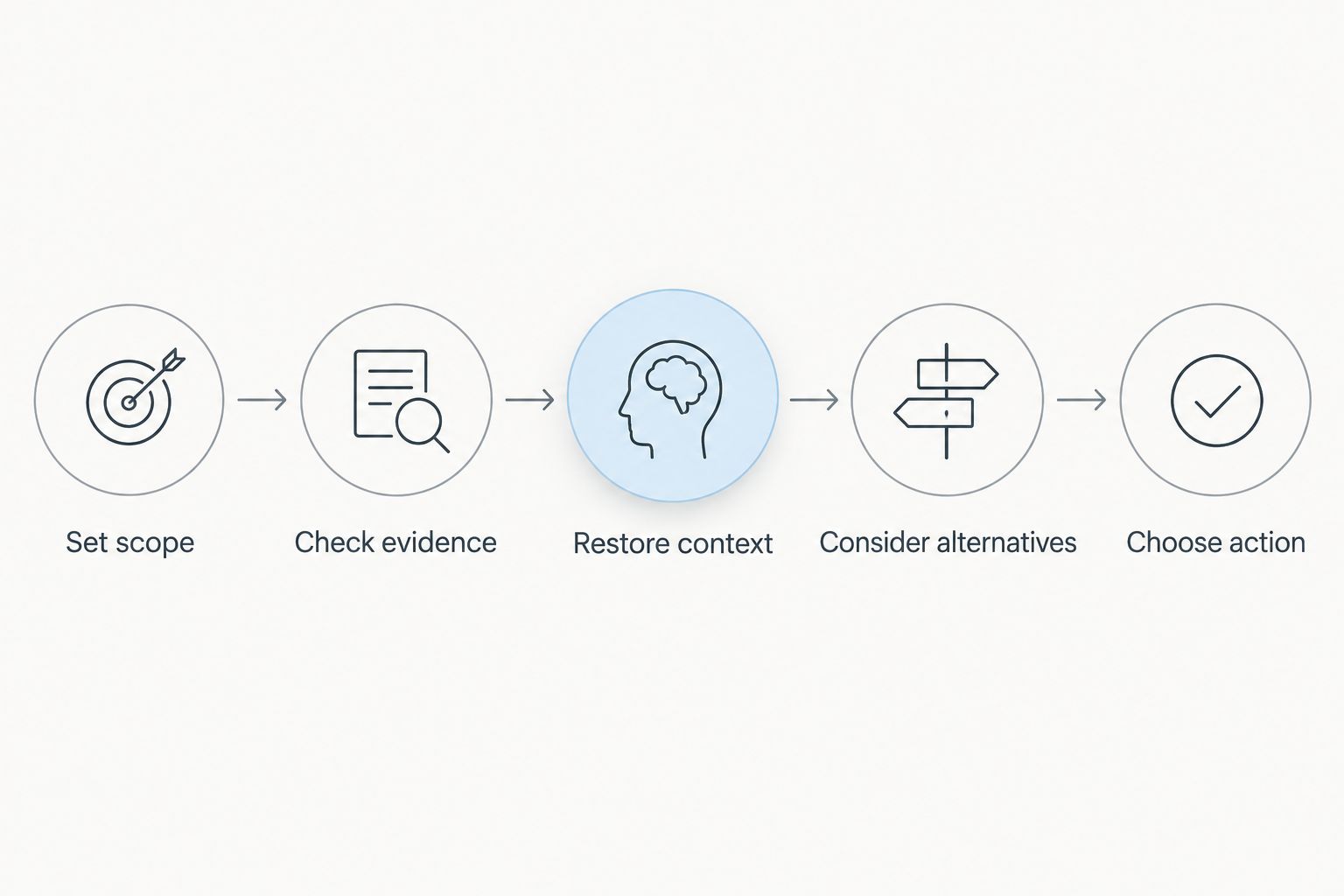
Use the same checking process whether you read a report, inspect a spreadsheet, or run a script. A polished result still needs to survive contact with the original conversation.
- Set scope: State the question and the period you are examining.
- Check evidence: Open the messages behind the finding or calculation.
- Restore context: Read nearby exchanges and account for relevant offline events you know about.
- Consider alternatives: Ask what else explains the same observable pattern.
- Choose action: Turn a supported observation into a question, boundary, or reflection—not a diagnosis.
For a suggested starting window, inspect 7 days around a specific disagreement before making a claim about the whole relationship. Expand the window when the question requires it; the suggested duration is an organizational aid, not a clinical rule.
Keep observations separate from interpretations. A change in message volume is an observation. A conclusion about why someone changed their behavior needs evidence beyond that count.
Which option should you choose in 2026?
Choose Grey Mirror by Justlay for structured, evidence-linked relationship analysis. Choose a spreadsheet when your question is arithmetic, a local text editor when your question is about exact wording, and Python when you need custom, repeatable calculations.
You do not need to use every option. Start with the smallest workflow that answers your actual question, then add another only if it resolves a specific uncertainty.
For breakup reflection, define an endpoint before you begin: a question answered, a pattern documented, or a boundary clarified. Repeatedly rereading the same exchange is not the same task as gathering new evidence.
FAQ
What's the best way to analyze text messages without ChatGPT?
Grey Mirror is the best fit in this comparison for an evidence-linked relationship report. A spreadsheet, local text editor, or Python workflow suits narrower tasks such as counting, close reading, or custom calculations.
Is Grey Mirror just a ChatGPT wrapper?
Grey Mirror uses specialized relationship-analysis models and produces relationship timelines, evidence-linked findings, charts, and metrics. Evaluate those documented outputs rather than assuming its architecture from its category.
Can I analyze messages without uploading them?
You can read a compatible export in a local text editor or analyze it with a locally run script. Check sync, extensions, storage settings, and any network-connected services before treating a workflow as local-only.
Can I try Grey Mirror without a card?
Grey Mirror offers a free conversation analysis with four evidence-linked findings and no card requirement. That lets you inspect how findings connect to messages before choosing a full report.
Does Grey Mirror have a subscription option?
Grey Mirror Plus is a monthly subscription that includes one full report each paid month. Unused credits carry forward, unlocked reports are kept permanently, and one-off reports are also available.
Can text analysis prove whether someone cared about me?
Text analysis cannot prove another person's private feelings or intentions. It can help you examine observable communication patterns and the messages supporting an interpretation.
Which message platforms does Grey Mirror analyze?
Grey Mirror's stated scope includes exported histories from iMessage, WhatsApp, Instagram DM, SMS, and Telegram. The available record still determines what any analysis can examine.
One last thing
More messages do not automatically make a conclusion more trustworthy. A long export still leaves out conversations in person, missing messages, and context neither participant wrote down.
Use Grey Mirror by Justlay as a relationship-analysis aid, not an authority on another person's inner life. The most useful finding is one you can trace to the record, explain plainly, and distinguish from what you still do not know.